
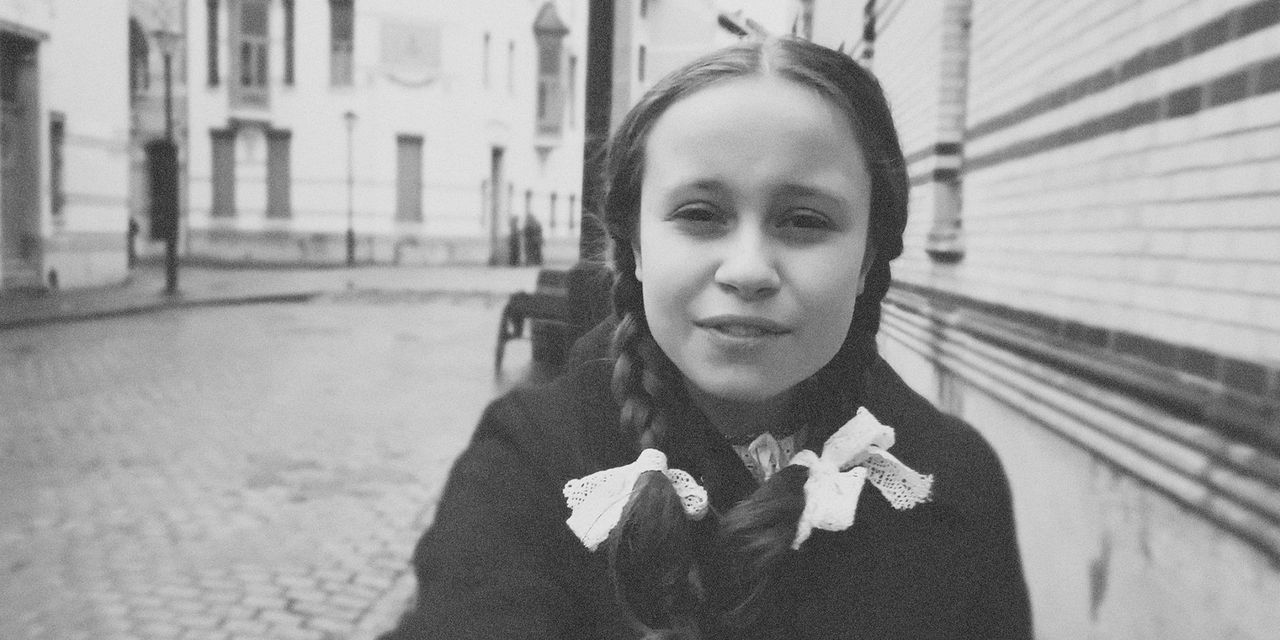
Using the Kazerne Dossin online learning modules in the classroom, you will be able to explore De vlog van Fée, a Ketnet series about the life of a 10-year-old Jewish girl during World War II.
Please note: This tour is only available in Dutch.
Fée’s character is based on Félicie Gruszow-Bloch, who was forced to go into hiding and lost her parents during World War II. In the Ketnet series, Fée takes the viewer on a journey through her life. Using the Kazerne Dossin learning modules for the third stage of primary education, you will also be able to explore the historical themes covered in the series in the classroom.
These modules will enable you to work towards a wide range of core history targets, such as knowledge of the past and the use of sources, chronological awareness and historical reasoning from multiple perspectives. Attitudes about identity and respect are also covered.
The modules follow the chronological order of the videos. Watch the entire vlog (1 lesson hour or, for example, two videos per lesson) and then work through the modules in chronological order.
Also discover the story of Félicie Gruszow-Bloch and her family.
Module 1 – Kazerne Dossin
What is Kazerne Dossin? And what does this place have to do with Fée? Archivist Dorien will take you on a tour! She knows exactly where to look and will tell you all about this old building.
After completing this module, you will be able to:
- explain what Kazerne Dossin is;
- explain what an archivist does;
- deduce from a historical document what happened to Fée’s mother.
Module 2 – Occupation
Fée lived in occupied Belgium during World War II. But what does ‘an occupied country’ actually mean’? And how did Belgium end up in such a predicament?
After completing this module you will be able to:
- provide an overview of World War II, including key concepts and events;
- list some of the causes and consequences of World War II;
- consider World War II from different perspectives.
Module 3 – The Persecution of the Jews
Fée and her family were Jewish, which meant that they were not safe from the Nazis. But why was this? What did the Nazis have against the Jews? And what did it mean to be Jewish?
After completing this module, you will be able to:
- list some of the reasons that led to the exclusion of Jews during World War II;
- list some anti-Jewish laws;
- describe how anti-Semitism has changed throughout history;
- explain several concepts relating to exclusion in your own words;
- explain what ‘multiple identity’ is, using examples.
Module 4 – Propaganda
The Nazis used propaganda to convince as many people as possible that Jews were ‘evil’. Propa-what?! This module will explain what it means and how it works. Pay attention because propaganda still exists today.
After completing this module, you will be able to:
- provide a description and characteristics of propaganda;
- recognise and analyse examples of propaganda;
- explain what ‘stereotypes’ are, using examples.
Module 5 – Going into hiding
Fée and her family had to move house twice because they were in danger from the Nazis. Many Jews had to flee and find somewhere to hide during World War II. It is referred to as ‘going into hiding’.
After completing this module, you will be able to:
- explain what it means to ‘go into hiding’;
- list several reasons why people had to go into hiding during World War II.
- put yourself in the shoes of a child in hiding.
Module 6 – Difficult choices
Moving house isn’t something you do on a whim. Particularly not with just one suitcase. Fée’s parents had to make some very difficult choices. With hindsight, it is easy to say whether their choices were right or wrong. But what do you do if there’s no time to weigh up the pros and cons?
After completing this module, you will be able to:
- consider a difficult choice during World War II from various perspectives, taking into account the differences between then and now;
- when faced with a difficult choice, offer several solutions, with arguments for and against.