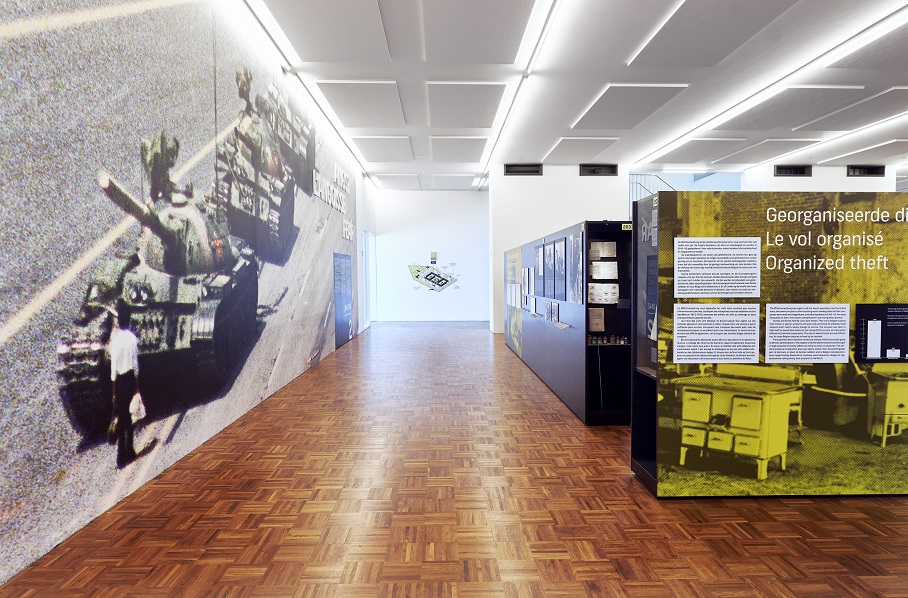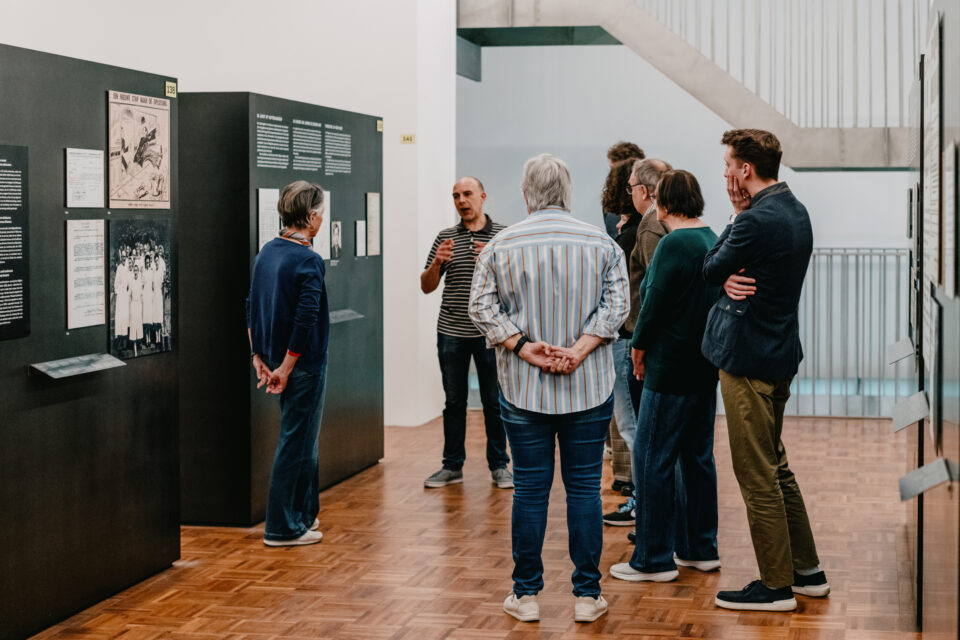
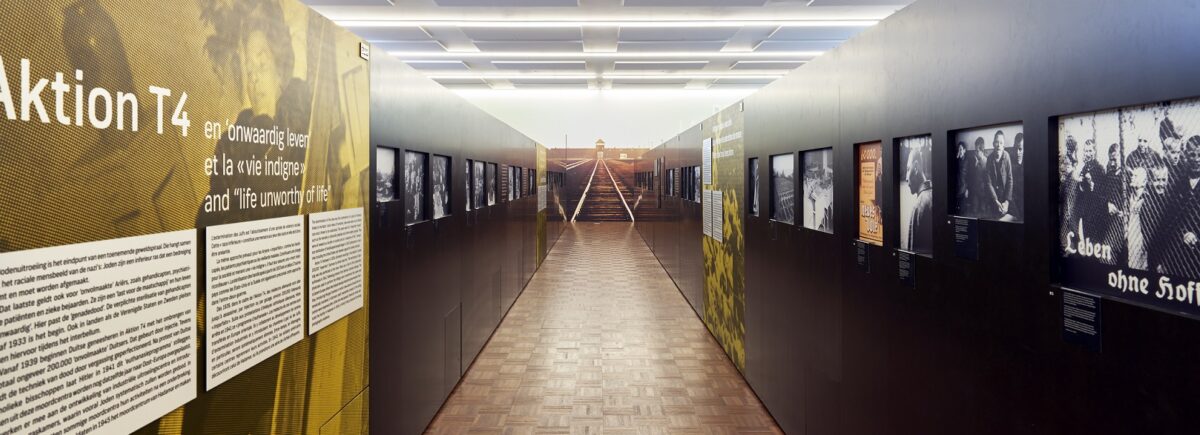
The permanent exhibition at Kazerne Dossin focuses on the persecution of Jews,
Sinti and Roma in Belgium and northern France during the Second World War.
Building on this historical reality, the museum makes a connection with universal
human rights today.
How was it possible for the persecution of Jews, Roma and Sinti, and the Holocaust to take
place? Why the persecution? What did it mean for the victims? How did they react? Was
there no resistance? The permanent exhibition at Kazerne Dossin provides answers to these
questions about the Holocaust.
The exhibition will immerse you in the spiral of escalating violence that ultimately led to mass
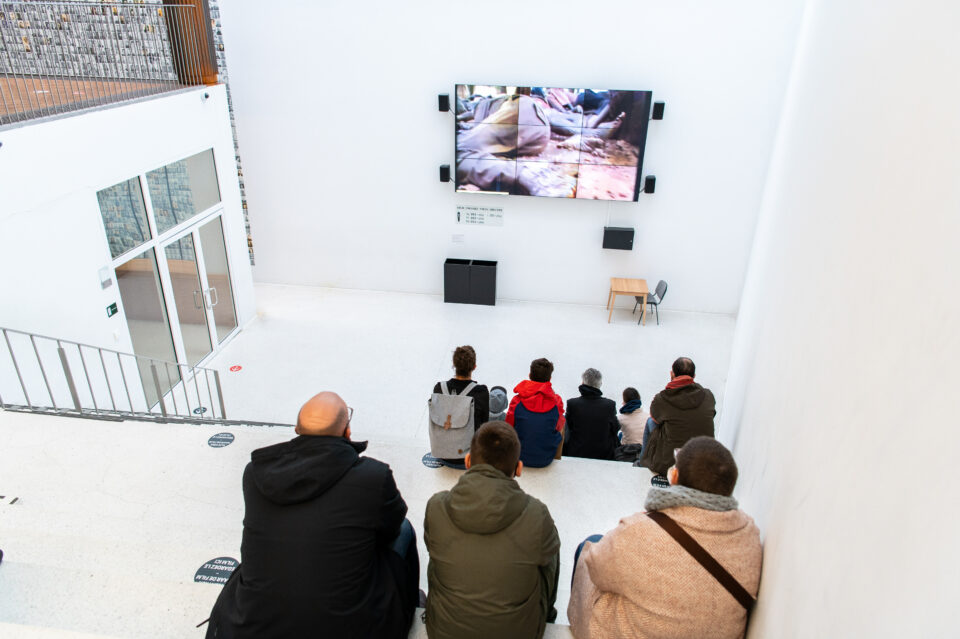
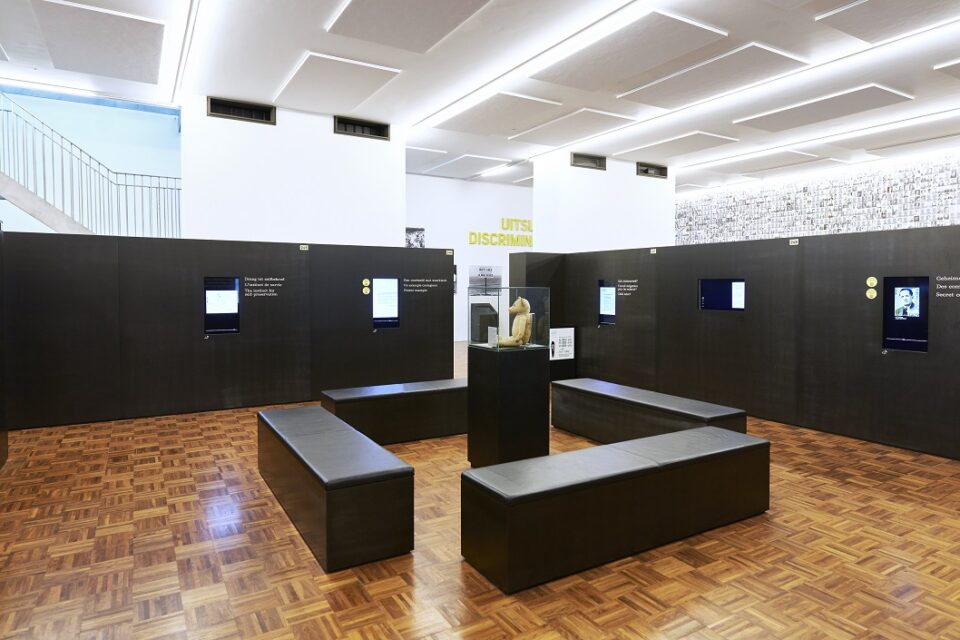
murder. You will follow the victims’ journeys chronologically, through photographs,
documents, artefacts, multimedia and interviews with survivors. During your visit, you will
find out more about the role played by the perpetrators and bystanders, including members of the resistance. The exhibition addresses the restoration of justice and the process of
coming to terms with trauma amongst the survivors.
It also explores other examples of exclusion and mass violence, both past and present. A
visit to Kazerne Dossin offers a profound insight into how discrimination works and
encourages you to reflect on human dignity. It shows that we all have the power to stand up
for someone else, despite peer pressure and aggression.
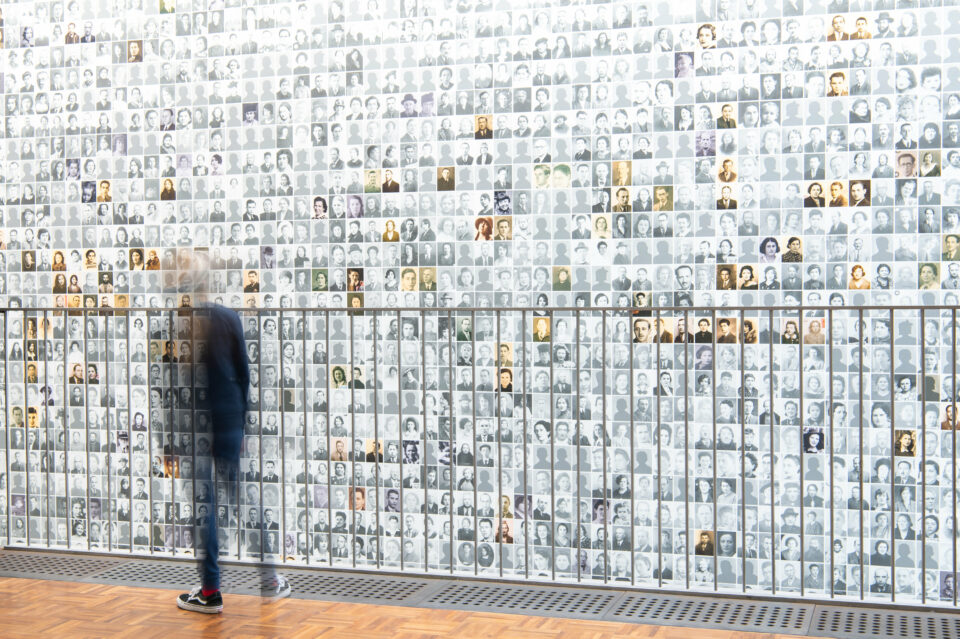
A recurring theme throughout the museum is the huge wall of portraits on every floor. From
the ground floor up to and including the third floor, you can see the faces or silhouettes of
the 25,843 Jews, Sinti and Roma who were deported from the Dossin Barracks.